Is Winter Pollution Destroying Your Skin? – Struggling with dull, dry, and irritated skin during India’s high AQI winters? Pollution can damage your skin barrier fast. This blog shares 5 proven steps to pollution-proof your skin, including cleansing, protection, and winter skincare essentials for healthy, glowing skin.
Winters in India hit your skin hard enough with dry air and wind.
But when high AQI crashes the party, your skin goes into full-crisis mode.
Winter may be your favourite weather, but it usually isn’t the best thing for your skin. The air’s filled with smog, and along with tiny PM2.5 particles, toxic gases constantly find ways to sneak past your skin barrier. Hence, it becomes more important than ever to protect your skin from pollution.
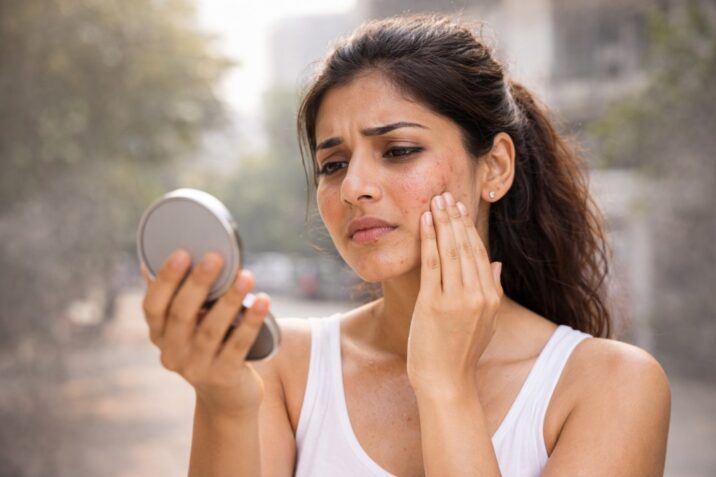
All these factors can cause skin damage like dullness, breakouts, and that tired look that no filter out there can fix. Maintaining your skin then becomes tougher.
Wondering how you can protect your skin from winter and pollution’s deadly combo?
Here’s a guide that breaks down the 5 simple steps of skincare to protect you from pollution:
Table of Contents
How does pollution affect your skin?
Picture this: you’re breathing the same dirty air your face is exposed to all-day, everyday.
High AQI means pollutants like PM2.5, nitrogen dioxide, and ozone dive into your pores, triggering inflammation and weakening your skin barrier.
Because of this, dryness hits harder, as there are no natural oils remaining on your skin to protect and moisturize you.
Studies show that long exposure to PM heightens dark spots and pigmentations by over 20%. Here’s how it happens:
- Free radicals and oxidative stress: Pollutants generate free radicals that attack lipids, proteins, and DNA in the skin. This worsens the effects of air pollution on skin.
- Chronic low-grade inflammation: Continuous exposure to polluted air keeps skin in a state of mild inflammation. This worsens sensitivity, redness, and conditions like eczema and dermatitis over time.
- Impaired wound healing: Pollution-weakened skin barrier and ongoing oxidative stress slow down repair. Due to this, your acne marks, scratches, and irritation will take longer to fade.
- Increased sebum oxidation: Particulate matter and gases oxidize the sebum on your skin’s surface. It makes your skin thicker and more comedogenic, which can deepen blackheads and worsen breakouts.
- Microbiome disruption: Polluted environments can alter the balance of good and bad microbes on the skin. This makes it easier for harmful bacteria to overgrow and trigger irritation or infections.
And contrary to popular belief, even indoor time doesn’t save you if windows are open. It’s why you need a winter skin care routine for that glowing skin.

The 5 steps that’ll guard your skin against winter-pollution
Now that you know the various factors that make your skin miserable, let’s move on to the 5 steps that will ensure that your skin does not need any filter:
Step 1: Master the cleanse (nightly ritual)
After a long day (even at home), the night ritual is a must. And yes, it’s the first step to a healthy winter skin.
Make sure to not skip this double cleansing step to evict how to protect your skin from pollution and smog grime.
Grab an oil cleanser first. It melts PM2.5 and oil-soluble junk like makeup/smog without drying your skin out. Follow with a gentle foaming or micellar water to sweep residue.
Skipping this is one of the common winter skincare mistakes. Because if you do so, then pollution sits partying in pores, leading to breakouts and dullness. Follow it religiously, so that your skin breathes relief, and your skin barrier preps for the next day at night.

Step 2: Incorporate anti-oxidants in your routine
The pollution out there is not giving stress just to your mind, but also does the same for your skin too. Harmful particles in the air cause oxidative stress, which basically refers to an imbalance of free radicals and anti-oxidants.
Free radicals and anti-oxidants both are found naturally in our skin. But the issue arises when additional free radicals get settled on your skin due to pollution, and your natural anti-oxidants fail to tackle them.
This is why your skin needs anti pollution skincare products containing anti-oxidants to maintain its picture perfect glow. So, make sure that you do not skip an anti-oxidant rich serum in your beloved skin-care routine.
Go for vitamin C or niacinamide for dull skin or dark spots or focus on vitamin E, resveratrol, or retinol to control fine lines and ageing. These can work wonders to keep that pesky dullness at bay.
Step 3: Don’t forget moisturizer
Now that you have successfully removed the particles (and have somewhat stabilized them), it’s time to build back that much-needed barrier.
Pollutants penetrate your skin often leaving it dry and inflamed. And while nothing can stop them completely, building a barrier through moisturizers can significantly help protect the skin from pollution.
Check for ingredients like ceramides, hyaluronic acid and shea butter which can both build and retain moisture.
And to burst a very common myth, you shouldn’t skip moisturizer if you have oily skin. In fact, skipping moisturizer can actually make matters worse for you. Just use light-weight or oil-free ones, and you’re good to go!
Step 4: Apply the protective layer of sunscreen
When UV rays are thrown into the mix, pollutants get even harsher. Together, they severely affect the protective barrier of skin and intensify the problem of inflammation and redness.
The solution? A sunscreen to provide that additional layer of protection in your anti pollution skincare routine. And these sunscreens have come a long way. They do not just block the sun rays but also help fight pollutants to an extent.
Also, modern SPF30 and SPF50 sunscreens contain ingredients such as anti-oxidants and barrier repair agents. These help restore the natural balance of skin as well as build a barrier.
Step 5: Keep yourself healthy for a healthier skin
A study on the relation of pollution and skin health showed that pollutants affect skin even through their inhalation or ingestion.
As you know by now, anti-oxidants are crucial when it comes to protection against free radicals increased by pollution.
The amount of these anti-oxidants can be naturally increased in your body through colorful veggies (carrots, sweet potatoes, peppers) and fruits (blueberries, raspberries, pomegranate).
So, along with double cleansing steps, moisturizer, and sunscreen, make sure to have a good diet.

Conclusion
High AQI winters wreak havoc on your skin. According to recent studies, 1 in 4 people experience worsened symptoms of acne and eczema due to pollution.
But, you’re not out of hope. Using the 5 steps anti pollution skincare routine mentioned in this blog, you can achieve a super-strong skin shield!
With that, follow other cues as well, like keeping windows closed and shielding your skin (especially your face) whenever you’re traveling outdoors and are exposed directly to the environment.
Adjusting to high pollution isn’t rocket science, it just involves a thorough approach that must be strictly followed.
Finding it hard to decide what exactly to use and when? Make use of AI in skincare and chat with Dewi for a fully personalized version of your skincare routine!
FAQs
1. Can pollution really damage skin even if I stay indoors?
Yes, air pollution enters through open windows and ventilation, affecting skin.
2. How often should I cleanse my face during high AQI days?
Cleanse twice daily to remove accumulated pollutants and prevent clogged pores.
3. Are antioxidants necessary for all skin types?
Yes, antioxidants benefit every skin type by combating oxidative stress.
4. Should oily or acne-prone skin skip moisturizer in winter?
No, skipping moisturizer worsens oil imbalance. Choose lightweight formulations instead.
5. Is sunscreen required during winter pollution?
Absolutely, UV rays and pollutants together intensify skin damage, making sunscreen essential year-round.