
Find out where skincare products should be stored bathroom or fridge. This guide explains how temperature and humidity impact skincare ingredients and product lifespan.
Shopping carts empty. Money swiped from your account. Alas, you’ve ordered this month’s skincare products.
Parcel just arrived. A delight on your face – the same as every month. But, are you storing all of those products in your bathroom cabinet?
Now, if you’ve been thinking you can store your skincare anywhere then congratulations, you’ve unknowingly been sabotaging your own routine. Store them on a sunny windowsill, beside a steamy shower, or in a random bag, and you can kiss your expensive products goodbye.
That’s because skincare isn’t as low-maintenance as we wish it were. After all, it’s your skin that we are talking about.
Show some care, put in a little extra effort, and store them the right way. But, how to store your products in the correct way?
Read on to learn where to store skincare products:
Key takeaways
- Skincare storage matters as much as application, heat, cold, light damage formulas over time.
- Bathrooms suit only stable, sealed products as humidity and temperature shorten shelf life significantly faster.
- Refrigeration benefits sensitive actives like vitamin C, but ruins creams, oils, and emulsions easily often.
- Repeated temperature changes cause separation, texture changes, and reduced effectiveness, even before expiry dates arrive.
- Always store products based on ingredient needs and not based on convenience, aesthetics, or social media trends.
Table of Contents
How extreme temperatures affect your skincare products

Extreme temperatures specialize in ruining perfectly good things without warning. And this includes your precious skincare products as well. According to the Journal of Industrial and Engineering Chemistry, exposure to direct sunlight and thermal stress often result in accelerated decomposition and contamination.
Not knowing how to properly store skincare products can turn your high-performance skincare into an expensive disappointment. Let’s take a look at how heat and cold love to mess with the skincare products:
- Ingredient breakdown: Heat accelerates chemical reactions which break down sensitive actives like vitamin C, until they’re no longer able to do their jobs. But, storing skincare in the fridge isn’t any better as extreme cold makes the water and oil components of the products separate, rendering them pretty much useless.
- Texture tantrums: Creams and lotions aren’t built for heatwaves and neither for sudden bursts of cold. Excess heat can cause formulas to separate, curdle, or turn oddly oily or watery. On the other hand, cold can make them cloudy or solid.
- Preservatives giving up: High temperatures, be it hot or cold, can weaken preservatives. Not knowing how to store skincare products makes it easier for bacteria and fungi to move in with their entire family, making your products their cozy abode.
- Fragrance and colour drama: These temperatures don’t just affect performance, they even mess with aesthetics. Fragrances may fade or change and ingredients like vitamin C may oxidise, turning your products into an unflattering shade of orange.
According to a 2021 study, not storing your products the correct way can lead to premature deterioration. So, let’s answer the age-old ‘where should I store my skincare products?’ question for you:
Bathrooms and skincare products A highly misunderstood duo
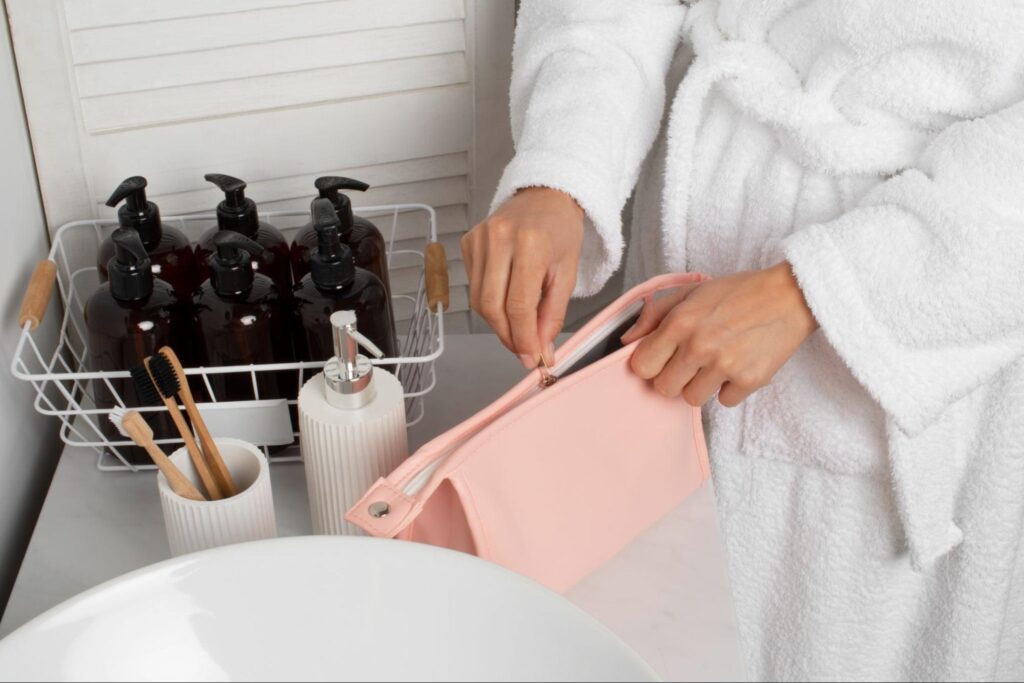
For reasons unknown, our bathroom shelves have become the designated spot for storing skincare products. Honestly, bathroom cabinets and skincare products do look like a perfect match. That’s until you get to know the scary reality of what actually goes down in your cabinet.
Your bathroom constantly undergoes temperature changes with hot showers, and endures the humid aftermath of it. This results in your skincare products’ ingredients being stressed, destabilized, and more prone to breaking down.
Not knowing how to store skincare in the bathroom and leaving them in its condensed environment is like throwing a big party for bacteria and other microbes. Because there’s nothing that they love more than a warm, humid skincare hangout with actives and antioxidants.
Although, this doesn’t mean that skincare products absolutely hate your bathroom. In fact, if your bathroom isn’t a steam chamber and sunlight (or any light for that matter) barely sneaks in, storing your products there isn’t a dealbreaker. The middle ground here would be to have a separate drawer or a cabinet installed there to better accommodate your product – where you store moisturizers, cleansers, and other lotions.
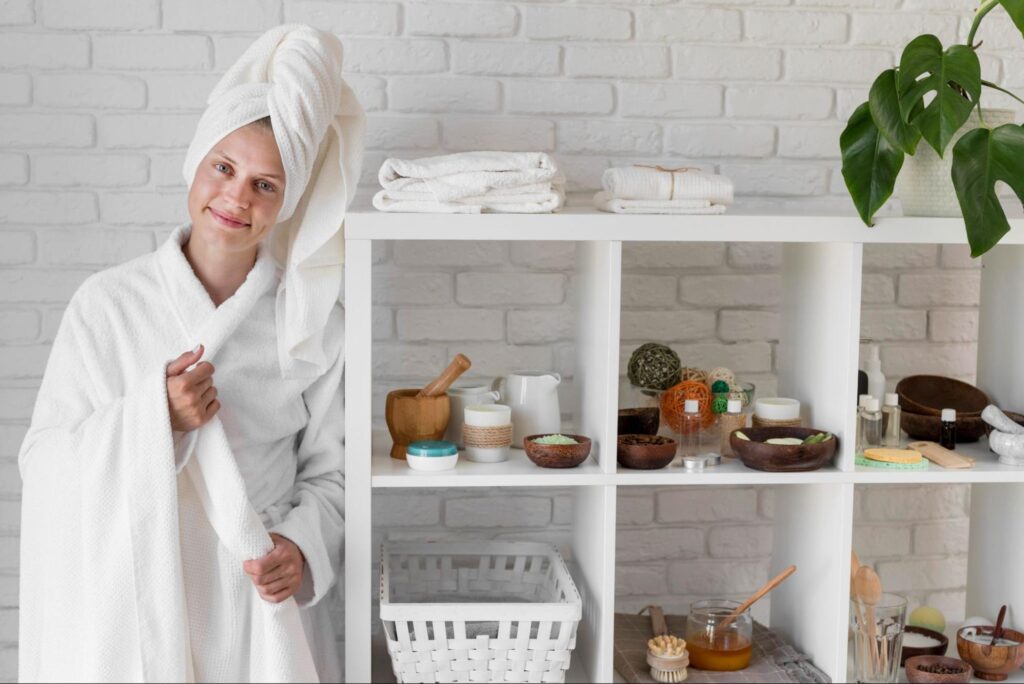
When to store in skincare in the bathroom
- You have a dark, covered cabinet or a drawer in your bathroom.
- The products you are storing there don’t contain actives like vitamin C or retinols.
- The packaging of the product is air-tight or dark/opaque.
When to not store skincare in the bathroom
- The ingredients in your products are more prone to instability.
- The product explicitly states to be stored in a dry, cool place.
- The temperature of your bathroom is not controlled and keeps fluctuating.
Fridges and skincare Cool vibes, risky business
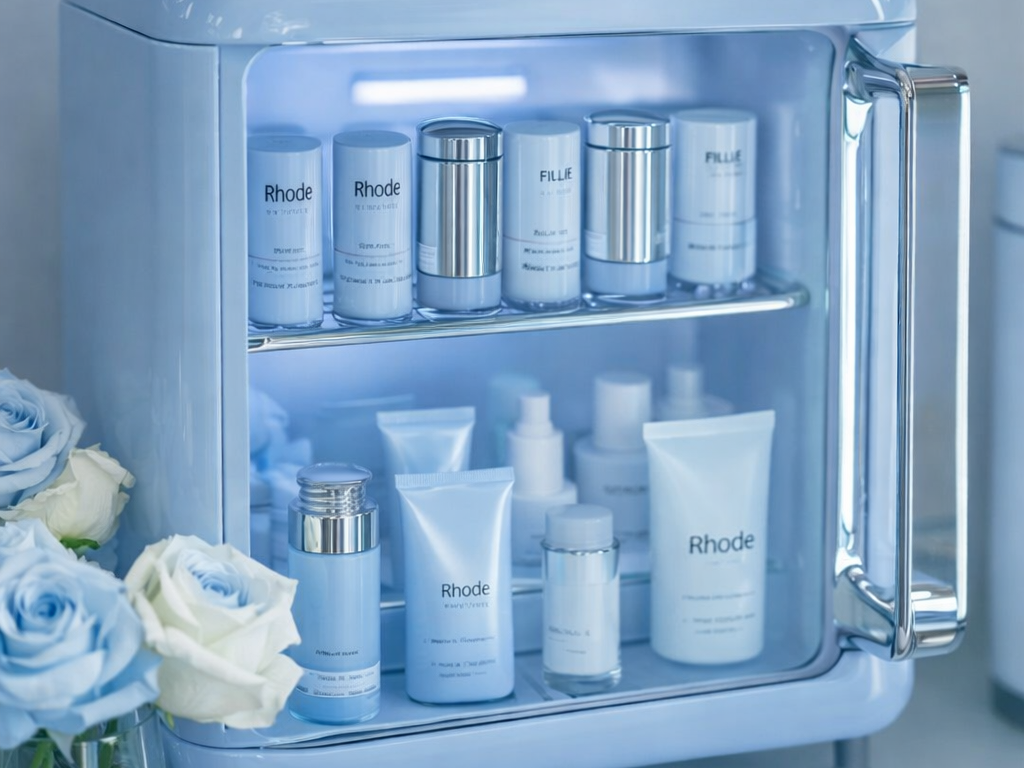
What kind of skincare-lover doesn’t dream of having a mini-fridge filled with their favourite skincare products. After all, it gives the golden opportunity of posting its cute pictures all over your social media. But, your skincare is not some trophy meant for show off.
Sure, chilling your products sounds fancy and spa-like, but keeping skincare in the fridge can be just as dramatic for your skincare (and ultimately for your skin) as your bathroom’s steam-filled chaos. Not every product is built for sub-zero adventures.
This study shows that thermal decomposition of a product depends on the type of ingredients and their ratio present inside it.
Creams and emulsions can separate or become grainy when they get too cold. Oils and balms can harden, turning what should glide over your skin into a sticky and frustrating mess. The clay mask that you like so much can turn into a chunky, unspreadable mess.
But wait, not all hope is lost yet. Storing products like vitamin c serum in the fridge is actually a great idea. While some creams and masks hate the chill, prized actives like vitamin C and retinol actually love it.
And it’s also a VIP lounge for your most sensitive serums and products containing anti-acne treatment.
Just because some products hate the cold, doesn’t mean others can’t benefit from the increased shelf life and stability it offers. It all depends on the ingredients and form of your product. Follow us Instagram
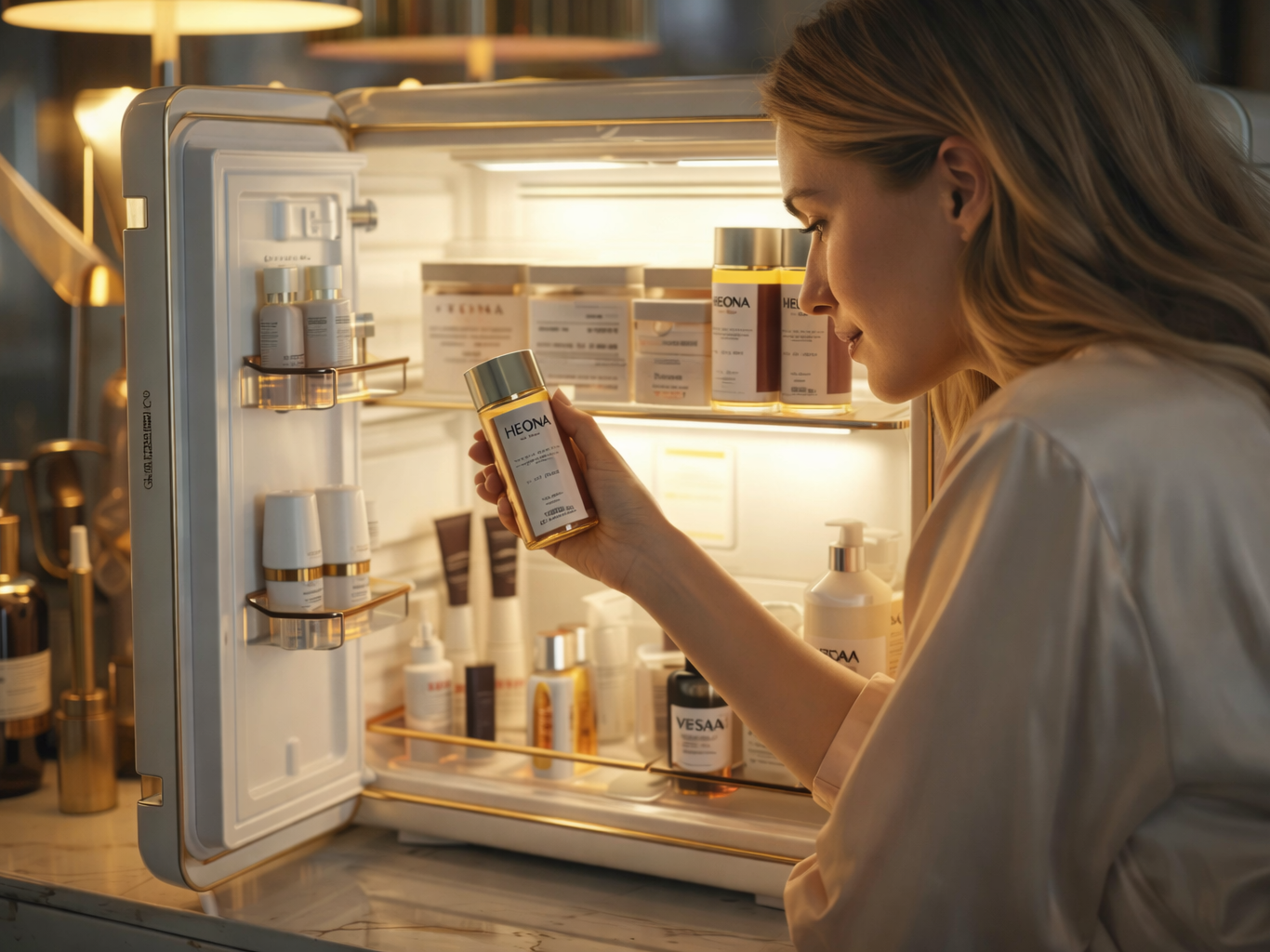
When to store skincare in the fridge
- The products contain unstable ingredients like vitamin C and retinol.
- You want an instant cooling effect after applying a product.
- Your product contains organic or natural ingredients.
When to not store skincare in the fridge
- The products are cream and emulsions which can thicken due to cold.
- Your product contains oils that may separate and become less effective.
- The product has a formula that is temperature-sensitive.
Conclusion
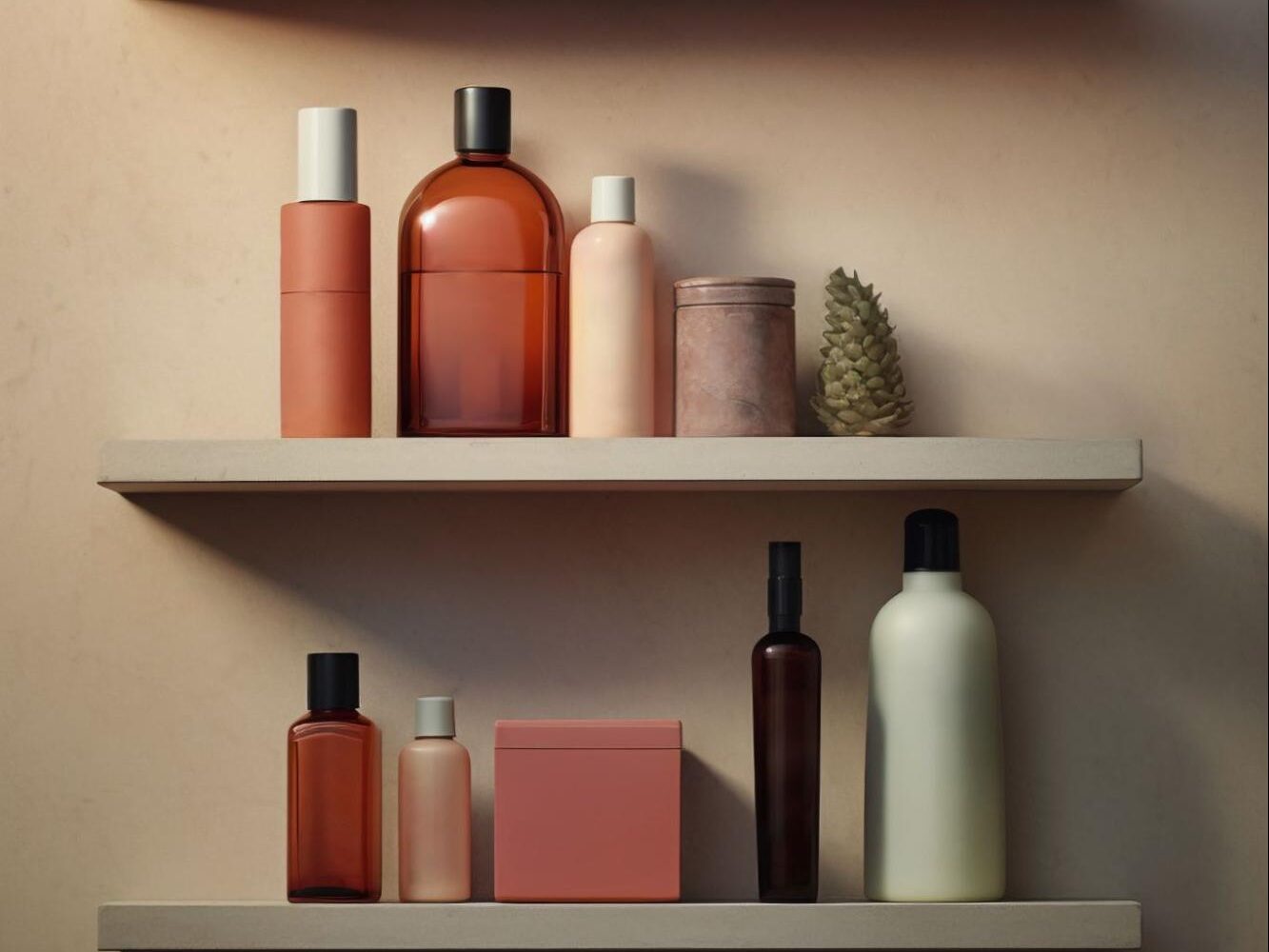
In the end, storing your skincare shouldn’t be based on convenience or trends.
Instead, respect what your products actually need. How you store serums will differ greatly from how you store cleansers or other products. But, the general rule of thumb is to keep them in a dry and dark place away from fluctuating environmental conditions.
Your skincare products are the everyday heroes your skin relies on. Treat them well, and they’ll treat your skin even better.
But taking care of them can be a little confusing. Chat with Dewi, your own AI-powered skincare assistant, to know how you can do it properly.
FAQs
1. Is storing skincare in the fridge a good idea?
No, only products with unstable actives benefit from fridge storage. On the other hand, many creams and oils can get damaged.
2. Is bathroom storage always bad for skincare?
This isn’t always the case. But, stable products in dark, well-ventilated cabinets can be safely stored there.
3. Where to store sheet masks?
If the sheet masks contain active ingredients or if you want a cooling effect after applying them, store them in the fridge.
4. Does cold stop bacteria growth in skincare?
Cold slows growth but doesn’t eliminate bacteria, especially in opened or contaminated products.
5. How to store face oils?
Face oils should be stored in a cool, dark place away from direct sunlight and heat. Keep the bottle tightly sealed to prevent oxidation and preserve the oil’s effectiveness.
More Great Wellness Stories From dewique
- How to Take Care of Your Skin While Doing a 9-5 Job
- Natural Moisturizers You Should Try This Winter To Combat Dryness
- Oily in Summers and Dry in Winters? 10 Tips for Dehydrated Oily Skin
- Pop it or leave it? How to treat acne without leaving scars
- How to Keep Your Skin Fresh and Acne-Free After Every Workout with Proper Post-Workout Skincare
- Is Winter Pollution Destroying Your Skin? 5 Simple Steps to Pollution-Proof It Now