Before trying new skincare or hair products, do a patch test. This guide explains what patch tests are and how you can perform one to protect your skin from irritation.
Before immediately trusting any skincare product with your skin’s life, pause for a second and think.
‘Is this product worthy of being applied on my skin?’
Do this because some skincare products out there can be major red flags for your skin, throwing it completely off balance and causing absolute chaos.
This is where a patch test smoothly enters and saves your skin from the unnecessary drama. It’s a low-effort and high-reward step that tells you whether a product is your glow-up partner or will make your skin issues worse.
Knowing how to do a patch test can turn an impulsive choice into a smart one. And this blog’s going to guide you through every aspect of it:
Key takeaways
- Patch testing helps identify irritation early and protects your skin from unnecessary reactions and long-term damage.
- Even gentle or viral skincare products can trigger contact dermatitis without proper patch testing beforehand.
- Skin reacts differently across areas. So, testing first reduces risk before applying products everywhere.
- Patch tests aren’t foolproof, but significantly lower chances of breakouts, redness, and compromised skin barriers.
- A few minutes of patch testing can save weeks of irritation, regret, and emergency skincare fixes.
Table of Contents
What is a patch test?
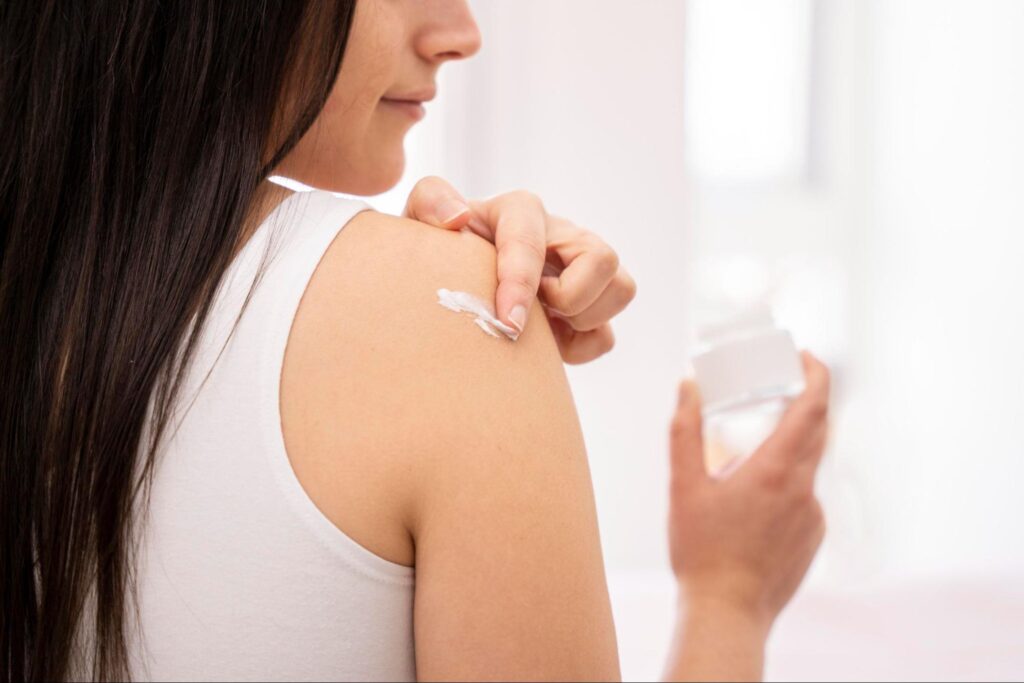
A patch test is basically when you put a skincare product on probation. It’s a simple step where you test a new skincare product on a small area of skin before applying it to your entire face.
In skincare terms, patch test means checking compatibility before commitment. This simple test lets you catch red flags early, instead of discovering irritation, breakouts, or itching after you’ve already gone all in. According to a study, patch testing helps detect allergic reactions and pinpoint the specific ingredients responsible for triggering.
This matters even more when you’re trying products with active ingredients like acids, retinoids, or vitamin C. But honestly, even a basic face wash can surprise you as your skin doesn’t always follow the script you expect.
Why do you need a patch test?
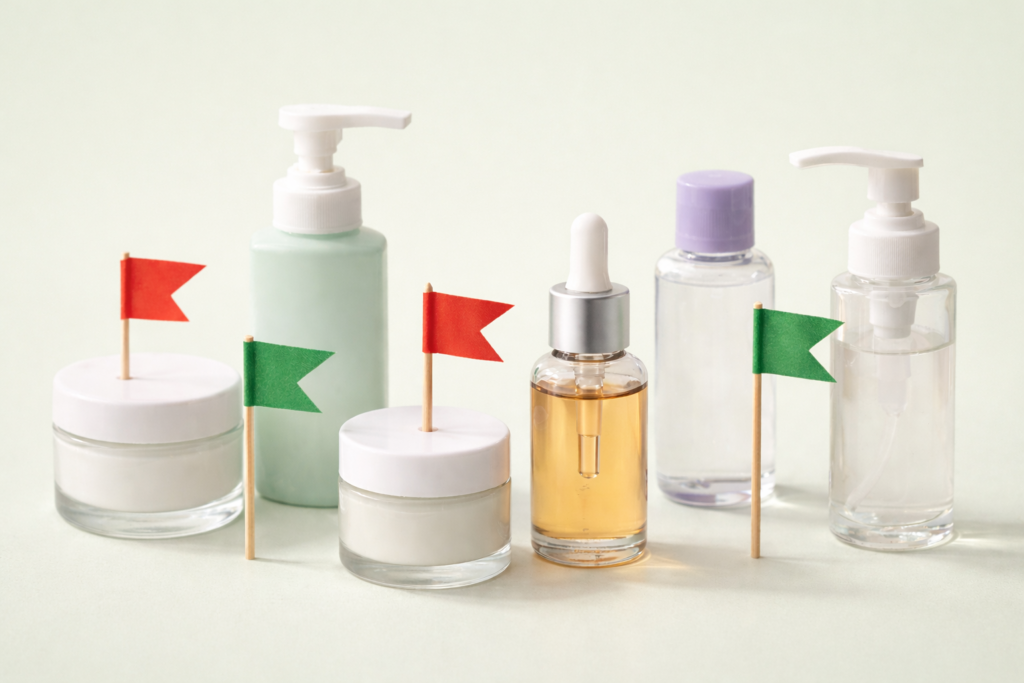
Believe us, your skin can throw temper tantrums worse than a 2 year-old baby. One wrong ingredient, and your skin responds with redness, itching, bumps, or that uncomfortable burning sensation you never signed up for. Hence, knowing how to do a skin patch test becomes absolutely necessary to protect your and your skin’s peace.
Some products or ingredients may even result in contact dermatitis. It is a skin flare-up that can show up as rashes, swelling, dryness, or irritation. Sometimes, this is your skin’s immediate SOS.
According to a 2025 study, contact dermatitis is the most common condition caused by cosmetics
Not only that, but making the wrong product your skin’s BFF can even lead to a damaged skin barrier. So, it’s always better that you take precautions rather than taking a dermatologist’s appointment after trying something new on your skin.
How to perform a patch test?
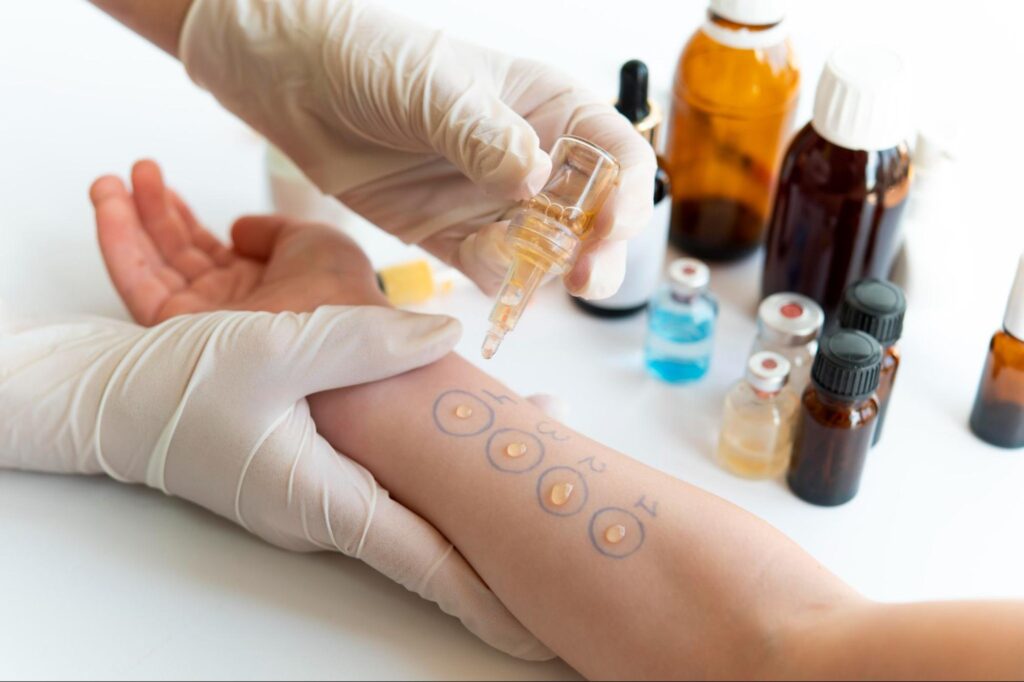
Here comes the million dollar question: How exactly do you perform this oh-so-necessary patch test?
Well, it’s pretty easy. Do your skin a favor and perform the below listed 4 simple steps recommended by the American Academy of Dermatology before making any new product a permanent resident of your routine:
Step 1: Choose
Look for a spot on your skin where the product applied won’t be accidentally washed or rubbed. Go for the bend of your elbow, the inner side of your forearm, or behind the knee as these are ideal areas where you can patch test face products.
Step 2: Apply
Clean the chosen spot with water or soap. Then, take as much product as you would regularly use and apply it on the spot. Do this for 7-8 days, as your allergies won’t show up in just a few hours.
If you are wondering how to do a patch test for face wash or other rinse-offs, here’s your answer: Leave the product on for 5 minutes then wash it off.
Step 3: Wait
Leave the product there for as much time as you would regularly. Keep in mind to not wash or rub this area during this time. Let your skin get acquainted with the product.
Step 4: Monitor
Keep monitoring the area for any signs of redness or itchiness. If anything feels off, rinse the product off immediately and stop using it. But if your skin stays calm and drama-free, congrats.
Your little ‘how to do a skin patch test at home’ session was successful.
What to do if you experience a reaction?
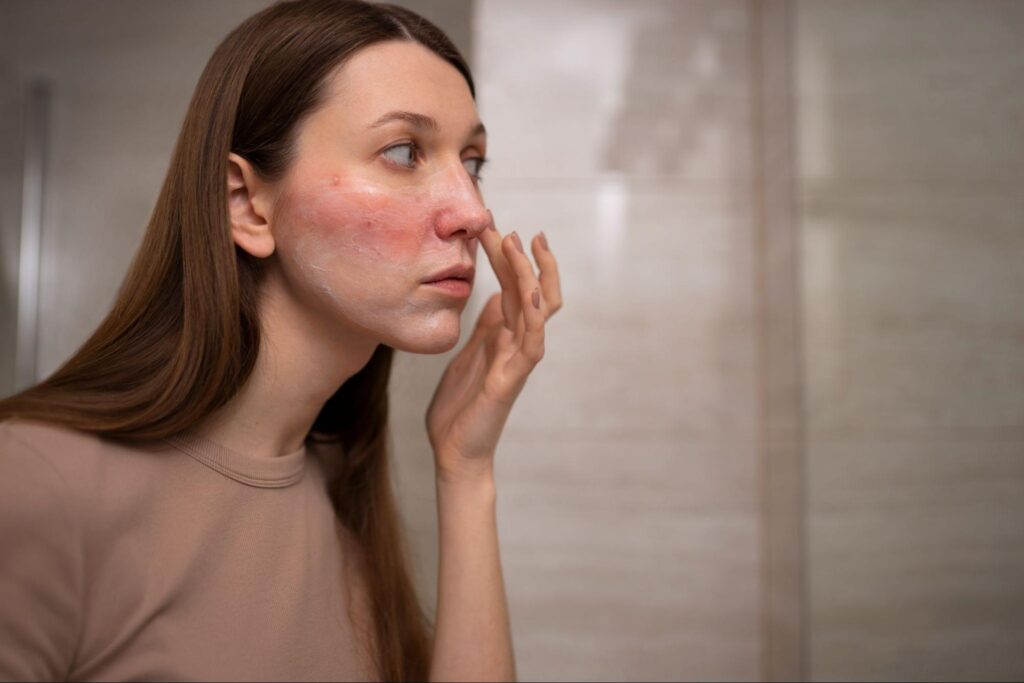
Let’s assume the product didn’t pass the vibe check. Maybe your skin started tingling, turning red, itching, or breaking out like it was personally offended.
First things first, don’t panic and definitely don’t try to ‘push through it’. Skin reactions are your body’s way of saying no, and this is a boundary that you should respect.
Here are the next steps after learning how to patch test new skincare:
- Wash the product off as soon as the signs start showing and immediately cancel it off of your skincare routine.
- Write down the name of the ingredients, preservative, or the product for the future reference.
- Calm your skin’s mini meltdown with a little petroleum jelly or an ice pack to cool things down.
- If your skin has gotten a little too serious with its hate for the product, you may want to seek professional help.
Limitations of a patch test
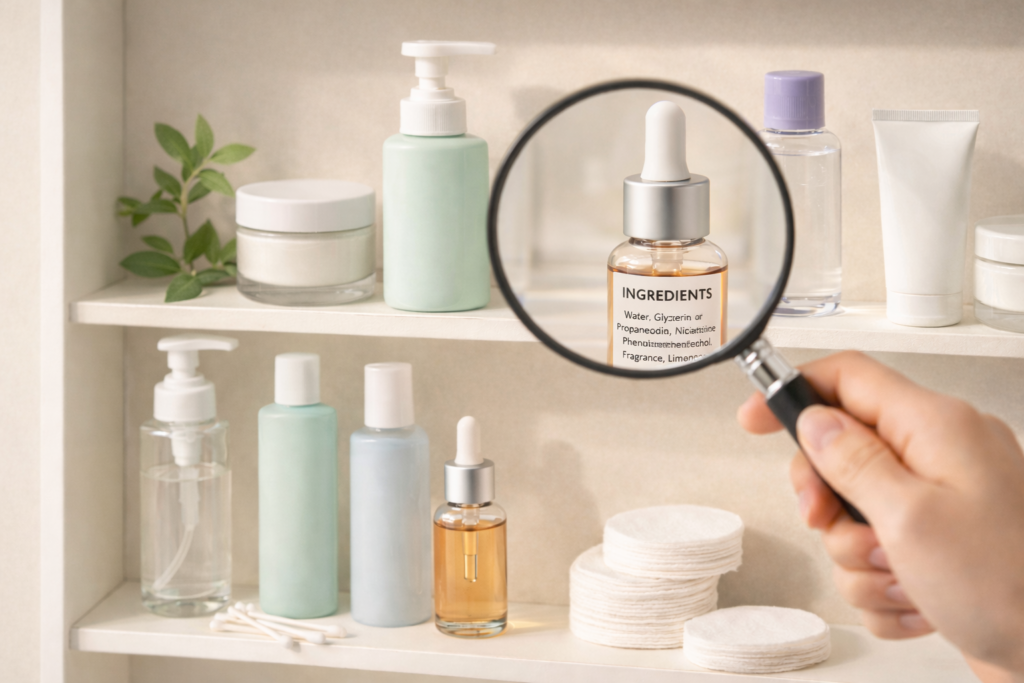
Let’s be clear, a patch test is powerful, but it’s not magic.
Because honestly, even after knowing how to spot test skincare there’s no 100% guarantee your skin will be okay. It can be a real cry baby sometimes if not treated carefully.
So even if you are doing a patch test, keep the following things in mind:
- Not foolproof: Patch tests can’t always predict how your entire face will behave once the product is fully introduced.
- Delayed drama: Your skin is complex, and sometimes reactions show up later such as after repeated use or when combined with other products.
- Outside factors: A patch test also doesn’t account for factors like weather changes, hormonal shifts, or a weakened skin barrier.
- Skin area matters: Ingredients can react very differently on different parts of your skin. What works on your forearm may not sit as calmly on your cheeks.
Conclusion
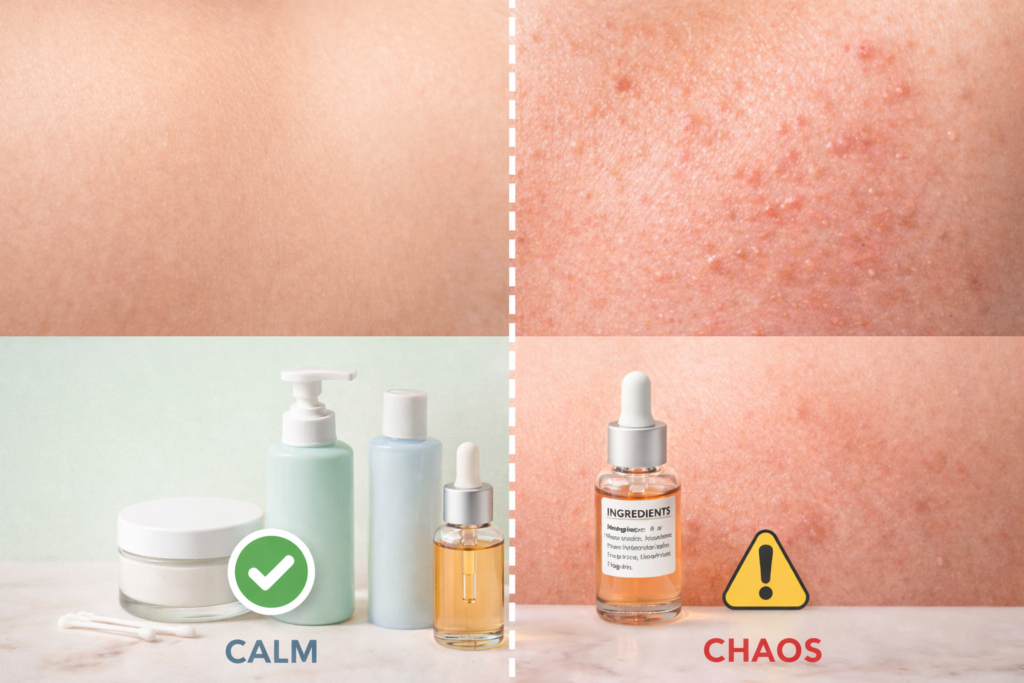
Skincare isn’t about blindly trusting every other hyped product.
Rather, it’s about being smart with your product choices. Slapping on a new product on your skin without testing it first is basically inviting chaos and then hoping for the best.
A patch test may feel like an extra step, but it’s really just a few minutes of patience that can save you weeks of breakouts and regret. It helps you filter out the red flags, respect your skin’s boundaries, and build a routine that actually works for you.
If a tiny patch of skin can protect your whole face, that’s a habit worth keeping.
But even after reading everything about patch tests, it can be a little confusing. Chat with Dewi, your AI-powered skincare assistant, to avoid any confusion and solve lingering doubts.
Frequently Asked Questions
1. What is patch testing skincare?
Patch testing skincare is the process of testing a product on a small skin area to check for irritation, allergies, or adverse reactions before applying it to your entire face.
2. Can I patch test multiple products at once?
It’s best to patch test only one product at a time so you can accurately identify which product causes a reaction.
3. How long to patch test skin care?
Ideally, you should monitor the patch-tested area for twenty-four to forty-eight hours to observe any delayed reactions like redness, itching, or inflammation.
4. Do you need to patch test face wash?
Yes, face washes can also disrupt your skin barrier or trigger irritation. This makes patch testing equally important before regular use.
5. Where to do patch tests for faces?
Common areas include behind the ear, along the jawline, or the inner forearm. These spots help detect sensitivity without affecting visible areas.
If you would like to see our shared skincare tips in more formats, please follow us on Instagram, where we share daily tips and useful skincare advice.