Are Hard Water Effects on Your Skin causing dryness, irritation, or acne? Find out how hard water impacts your skincare and the best ways to protect your skin.
Have you ever noticed that your skin acts completely different when you travel? You visit your cousin’s place in another city, and suddenly your face starts breaking out or feeling weird?
The real culprit might be tap water. That’s because it may be loaded with high levels of calcium and magnesium which severely affect your skin.
You are out there spending some serious money on fancy serums and moisturizers. But behind the scenes, the water you wash your faces with is quietly undoing all your hard work.
Hard water’s effects on skin cannot be ignored. Read on to know what these effects are, and how you can prevent them:
Table of Contents
Key takeaways
- Hard water strips natural oils, and leaves your skin dry, tight, irritated, and more prone to breakouts.
- Minerals and chlorine reduce cleanser effectiveness. This causes residue buildup and poor product absorption over time.
- Heavy metals in tap water increase oxidative stress, and accelerates collagen breakdown and premature skin aging.
- A weakened skin barrier makes hydration essential to prevent sensitivity, dullness, and long-term moisture loss.
- Shower filters, gentle toners, and consistent moisturizing help protect skin from hard water damage.
What’s hiding in your tap water?
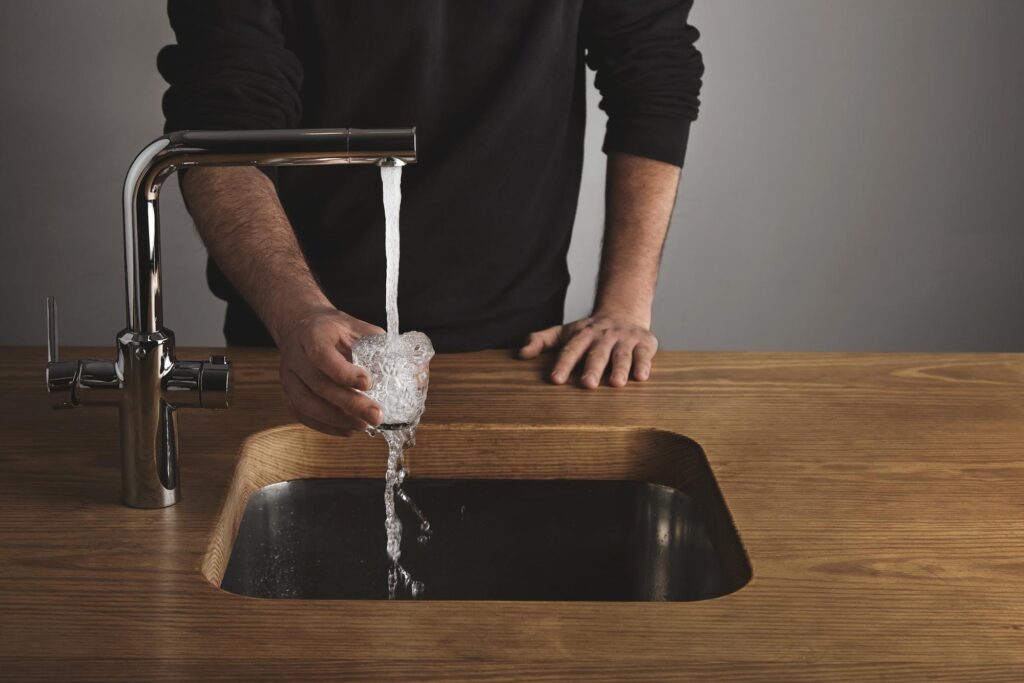
The first step of your skincare routine might actually be causing you more harm than good.
It has to do with the water you wash your face and body with. It might not be as pure as you think, and can cause irritation and itchiness. Here’s why you get itchy skin after a shower:
1. Hard water
The water coming from your tap isn’t just normal water – it’s hard water. This means it contains high levels of minerals like calcium, magnesium, and iron.
While these are perfectly safe for drinking, your skin kind of hates them. A clinical study showed that washing with hard water increased surfactant (cleaning agent) residues from cleansers on skin, raised moisture loss, and caused more irritation.
2. Chlorine
You get dry skin from water because of the presence of chlorine in it. To make tap water safe for drinking, chlorine is mixed in it. But along with killing the bacteria, chlorine also kills the natural oils of your skin.
It breaks down the natural barrier of the skin over time and dries out your skin. This causes redness, irritation, and sensitivity.
3. Heavy metals
Along with bearing the hard water side effects, your skin also has to take the brunt of heavy metals. When water goes through old pipelines, plumbing fixtures, or local infrastructure, it usually picks up a trace amount of heavy metals.
Lead, copper, mercury, and zinc can sometimes get mixed with the water. These trigger oxidative stress with prolonged exposure, resulting in inflammation and accelerated aging.
What is the hard water’s impact on skin?
Splashing some cool tap water on your face after a long day may give you a refreshing feeling, but it doesn’t always leave your skin as nourished as it feels.
In fact, the hard water coming from the taps of your home is a sworn enemy-in-disguise of your skin. It breaks down your skin brick-by-brick and leaves it dry and irritated.
According to this study, domestic hard water can increase eczema prevalence.
Here are the negative signs of hard water on skin:
1. Disrupts pH level
Your skin likes the party to be a little acidic. That’s because the essential functions of the skin such as lipid formation and cell turnover can only be performed at a certain pH level.
Tap water crashes the party like an unwanted guest and weakens the skin barrier through its alkaline properties. This results in increased moisture loss, reduced protection from harmful substances, and hard water eczema.
2. Removes natural oils
Your skin has its own security team – its natural oils. These oils work hard to keep out irritants and lock in moisture. This gives you that supple and bouncy skin everyone seems to be running after.
But the minerals found in hard water strip your skin of its natural oils. This leads to hard water skin bumps due to dryness, tightness, and increased sensitivity. Recent studies have shown that hard water can even increase the risk of psoriasis.
3. Breaks down collagen
Collagen is your skin’s built-in support system. It helps keep your skin smooth and wrinkle-free, also giving your skin the structure and strength to snap back after every smile. Skin loses its firmness and elasticity in absence of enough collagen.
We are not saying that hard water is aging your skin overnight. But constant exposure to it can increase hard water rashes, cause free radical production, and interfere with collagen synthesis.
4. Free radical damage
Free radicals are unstable molecules that love to cause damage to your skin. Fortunately, our skin keeps its backup ready in the form of antioxidants that stabilize these free radicals.
But the chlorine, minerals, and heavy metals found in tap water either directly produce the free radicals, or accelerate its formation. This causes an imbalance and results in oxidative stress.
How to fight back against hard water?
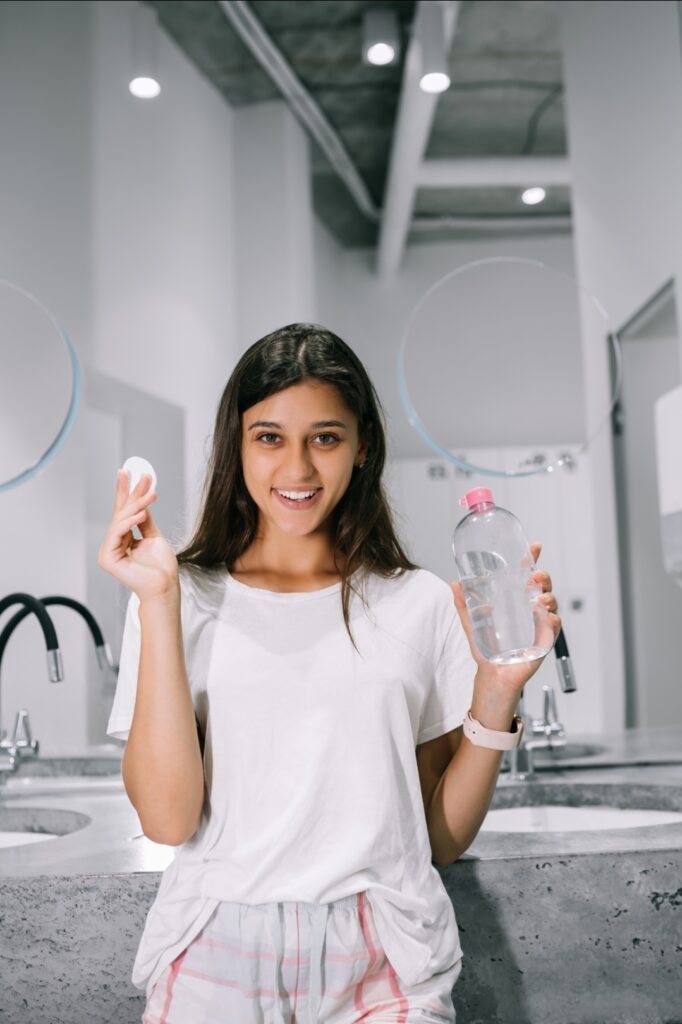
Do not get too stressed by the fact that hard water coming from your tap might be the reason why your expensive skincare routine isn’t working.
Wondering how to protect your skin from hard water? Here’s how you can do that:
1. Buy a non-alcohol toner
Your skin needs a non-alcoholic and gentle toner to get its life back together after tap water disrupts its pH level. Pour your toner over a cotton pad, and gently rub it over your skin. This removes any residue or build-ups.
2. Do not skip hydration
Hard water strips the skin’s moisture away every chance it gets. This leaves your skin feeling dry, tight, and itchy. What you can do in this situation to help out your skin is to feed it with hydration through moisturizers.
3. Invest in hard water shower filter
Make the tap water skincare-friendly by installing a shower filter, thus preventing the chlorine and minerals from touching your skin. This will ensure that your skin actually enjoys soothing effects without losing all its health.
4. Try out alternatives
If hard water won’t stop damaging your skin, then it’s time you switch it up. Micellar water or no-water cleansers reduce mineral contact, and prevent your skin from throwing tantrums. In extreme cases, you can also start washing your face with distilled water.
Conclusion
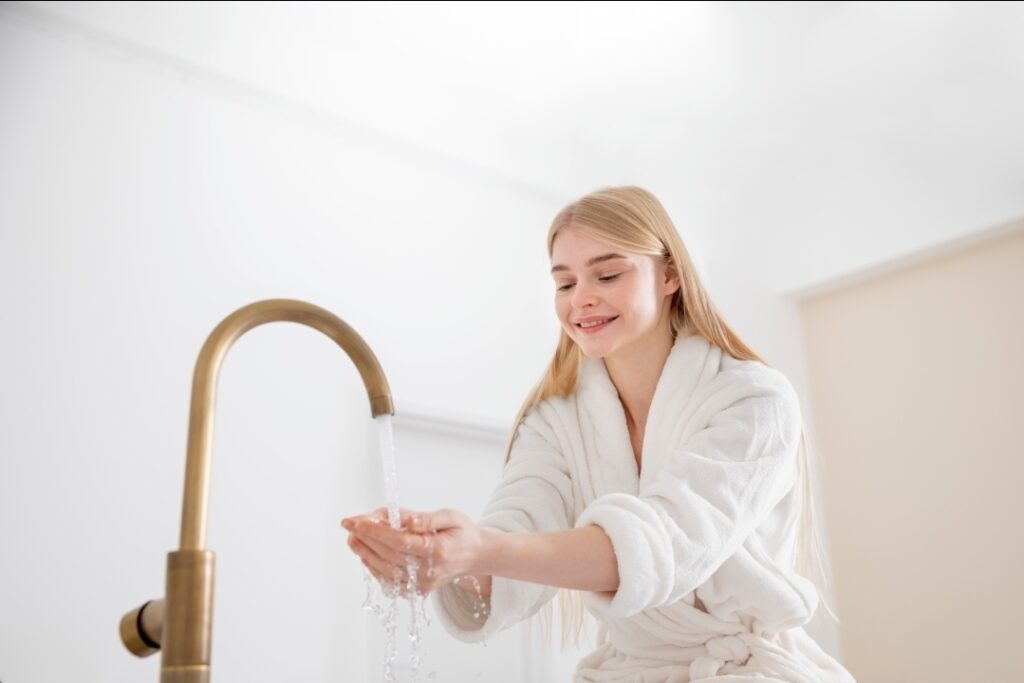
Tap water is the one thing that touches your skin before any product does, and the last thing you use before bed.
Yet you might have never really stopped to think if it’s actually safe for your skin or not. Well, as it turns out, it isn’t 100% safe.
But there’s a simple solution to this problem – using water softeners for bathroom taps and showers. Along with other simple steps, this can ensure hard water doesn’t leave your skin dry and dehydrated.
Still confused about how you can save your skin from the damage of tap water? Chat with Dewi, your AI skincare assistant, and get answers to all your questions.
Frequently asked questions
Yes, tap water can result in skin irritation. The minerals and chlorine present in the hard water (a component of tap water) disrupt the skin barrier. This triggers dryness, redness, and irritation.
Yes, shower filters reduce chlorine, minerals, and heavy metals. This helps protect moisture, barrier health, and comfort.
Tap water itself isn’t bad for your skin. But hard water and chlorine present in it can worsen dryness, sensitivity, and breakouts issues.
Yes, tap water causes skin pH imbalance. A gentle toner restores pH balance and removes mineral residue from your skin after cleansing.
Boiling can remove temporary hardness slightly. But it does not completely eliminate dissolved minerals found in hard water.
If you would like to see our shared skincare tips in more formats, please follow us on Instagram, where we share daily tips and useful skincare advice.